Many freshers lose confidence during interviews not because they lack technical knowledge, but because they struggle to communicate their thoughts clearly. This is especially common among students from Tier 2 and Tier 3 cities, where candidates may have strong academic knowledge but limited exposure to spoken interviews and professional conversations.
Interview communication is not about speaking perfect English. Recruiters usually look for clarity, confidence, structure, listening ability, and professional attitude. Candidates who communicate clearly often leave stronger impressions even when their technical answers are average.
Why Communication Skills Matter in Interviews
During interviews, recruiters evaluate more than just your answers. They observe your confidence, tone of voice, body language, clarity of thought, speaking flow, and ability to explain problems. Strong communication helps you explain ideas properly, handle pressure calmly, build rapport with interviewers, and appear more capable.
Common Communication Problems Freshers Face
1. Fear of Speaking English
Many candidates hesitate because they fear making grammatical mistakes. However, interviewers usually care more about clarity and confidence than perfect grammar. A clear answer in simple English beats a complex sentence delivered nervously.
2. Speaking Too Fast
Nervousness often causes candidates to rush through answers. Fast speaking reduces clarity and creates confusion — the interviewer loses the thread of what you are saying. Slow down deliberately, especially when starting an answer.
3. Using Filler Words Excessively
Words like "umm", "like", "actually", and "basically" are normal in small doses. Excessive usage makes answers sound unstructured and affects how confident you appear. Most candidates are unaware of how often they use fillers until they hear themselves recorded.
4. Memorised Answers
Candidates who memorise scripts often sound robotic and stumble when the interviewer goes off-script. Interviewers generally prefer natural communication where you understand the idea and explain it in your own words.
Practical Ways to Improve Interview Communication
1. Practice Speaking Daily
Communication improves through practice, not theory. Spend 15–20 minutes daily speaking aloud on topics like your self-introduction, project explanations, HR questions, and current topics. Consistency matters more than perfection — even 15 minutes a day compounds over weeks.
2. Record Yourself Speaking
This is one of the most effective improvement methods available to any fresher. Recording helps you identify unclear pronunciation, speed issues, filler words, and confidence gaps you cannot notice while you are speaking. Many candidates improve significantly after hearing themselves just two or three times.
3. Think in Structure
Strong answers follow a simple structure: introduction, explanation, example, conclusion. Structured answers sound more professional and are easier for the interviewer to follow. Before answering, take a second to mentally outline what you will cover.
4. Improve Listening Skills
Good communication also includes listening carefully. Avoid interrupting, answering before fully understanding the question, or rushing into a reply. Taking 1–2 seconds before responding shows composure and gives you time to think clearly.
5. Read Aloud Regularly
Reading articles, blog posts, or even textbooks aloud helps build vocabulary, improve pronunciation, and increase fluency. This is particularly useful for candidates preparing for HR interview questions who want to expand their spoken vocabulary without formal training.
The Importance of Mock Interview Practice
Many students prepare interview answers mentally but rarely practice speaking under pressure. That gap between thinking an answer and delivering it confidently is exactly where most freshers struggle in real interviews.
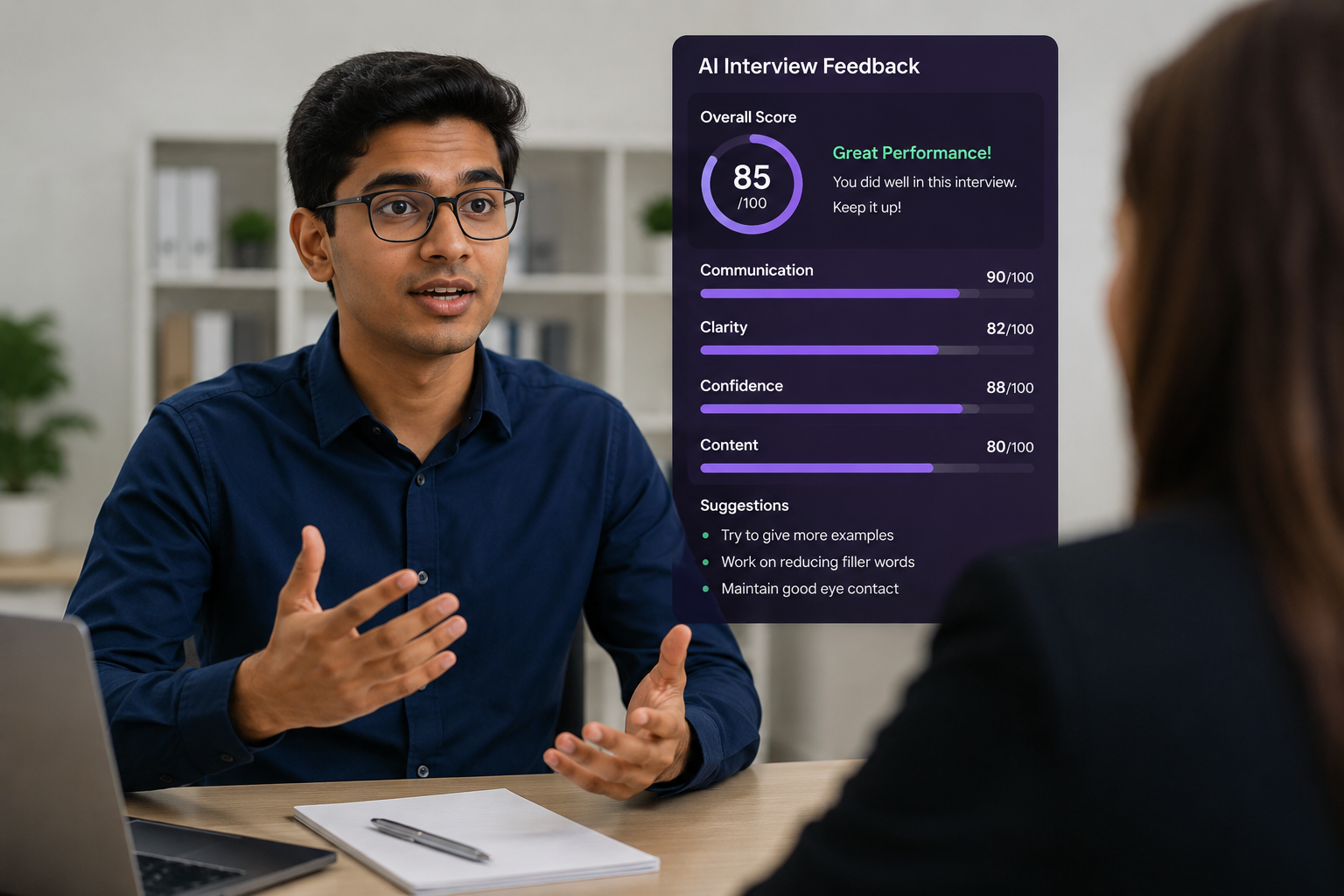
Mock interviews simulate real interview conditions and help you reduce nervousness, improve fluency, handle follow-up questions, and organise thoughts under pressure. AI-powered mock interview platforms make this kind of practice accessible without needing a friend, mentor, or coaching centre.
When you practice with an AI interviewer that scores your answers and gives specific feedback — on communication, clarity, structure, and content — you can see exactly what to improve rather than guessing.
How Body Language Affects Communication
Communication is not only verbal. Interviewers also notice your posture, facial expression, eye contact, hand movement, and overall energy level. Simple improvements like sitting upright, maintaining calm eye contact, and avoiding closed-off body language create stronger impressions without changing a single word you say.
Tips for Virtual Interviews
Online interviews require slightly different habits. Maintain a stable internet connection, look at the camera occasionally rather than at the screen, use earphones to reduce echo, avoid visible distractions in your background, and speak slightly slower than you would in person. Virtual communication clarity is particularly important because audio quality issues can make even a strong answer hard to follow.
Common Myths About Interview Communication
| Myth | Reality |
|---|---|
| Perfect English is mandatory | Clear and confident communication matters more than grammar perfection |
| Communication improves automatically over time | Consistent deliberate practice is necessary — it does not happen passively |
| Only extroverts communicate well | Even introverts become excellent communicators through structured practice |
Final Thoughts
Communication skills are one of the biggest differentiators during interviews and placements. Freshers who consistently practice speaking become more confident, calmer under pressure, clearer in explanation, and better at handling unexpected questions.
Interview communication is not a talent reserved for a select few. It is a skill that improves steadily through practice, honest feedback, and experience. The candidates who stand out are usually not the ones who knew the most — they are the ones who explained what they knew most clearly.
MockMate AI gives you a voice AI interviewer, real interview questions for your target role, and per-question feedback on your communication, clarity, structure, and content. Practice today — your first session is completely free.